Buying guide · 9 min read
Choosing windows: materials, glass and price
Choose the job each window needs to do, then compare complete products. The frame, glass, opening style and installation detail all affect the result.
Choose a material with the tradeoffs in view
Use this as a shortlist, then price the same size, opening style, glass package and finish. The budget descriptions are broad editorial guidance, not measured LA price ranges or a ranking of quality.
| Material | Budget position | Why consider it | What to check |
|---|---|---|---|
| Vinyl / uPVC | Often an accessible starting point for the budget. | Low routine frame maintenance; many common residential configurations. | Compare frame width, finish choices, reinforcement and allowed sizes. A premium vinyl system can overlap other materials in price. |
| Fiberglass | Often a step up from basic vinyl; compare the actual series. | A rigid frame material with painted finishes available in many lines. | Color, size and operating-style choices depend on the product family. Check care and finish terms. |
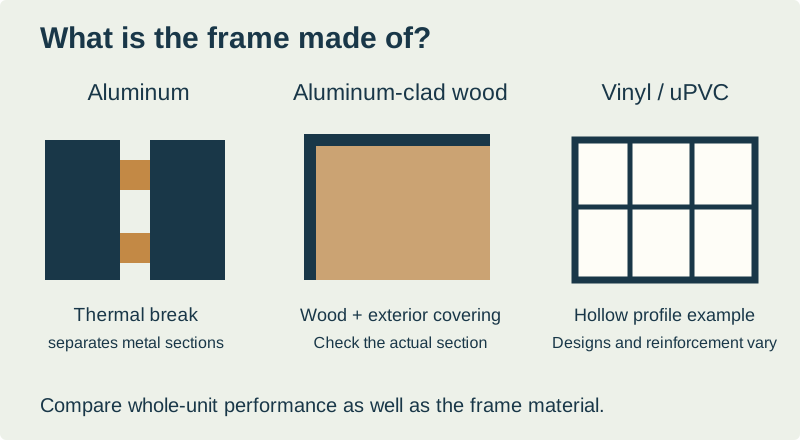
| Aluminum | A wide range, especially for large architectural systems. | Can support slender sightlines and contemporary designs. | Ask about a thermal break and whole-unit ratings. Coastal exposure, finish and hardware terms deserve attention. |
| Wood | Varies widely with species, size and detailing. | Natural interior appearance and options for paint or stain. | Exposed wood needs an appropriate finish and ongoing care. Ask how water is managed around the assembly. |
| Aluminum-clad wood | Often a higher-budget architectural option. | Wood inside, an aluminum exterior covering; less exposed exterior wood to maintain. | You still need to maintain the assembly. Confirm cladding construction, interior finish and warranty scope. |
| Composite / hybrid | Product-specific; request a comparable quote. | Combines materials to achieve a particular appearance or performance. | The name is broad. Get the manufacturer's description of the actual frame and sash. |
Wood with an aluminum exterior covering is usually described as aluminum-clad wood. It is different from an aluminum frame. Fiberglass with a wood interior and other mixed constructions also exist.
Read the numbers with a picture
U-factor: heat moving through the window
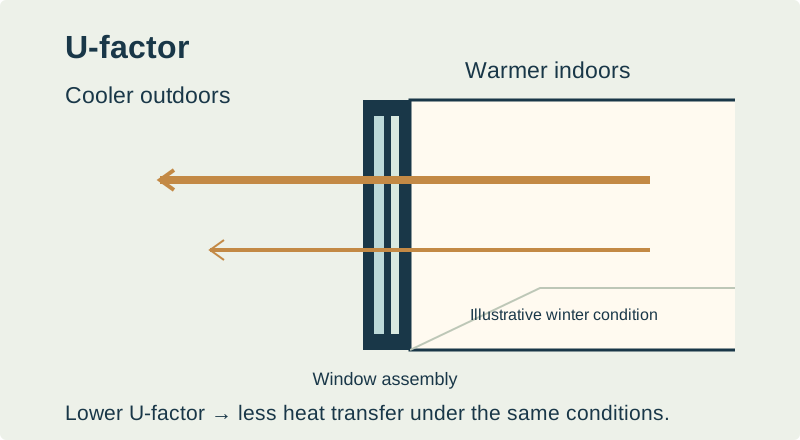
Lower means less heat transfer through the assembly under the same conditions. Heat moves toward the cooler side, so the direction can reverse on a hot day. Compare whole-window ratings in the same units.
SHGC: heat from the sun
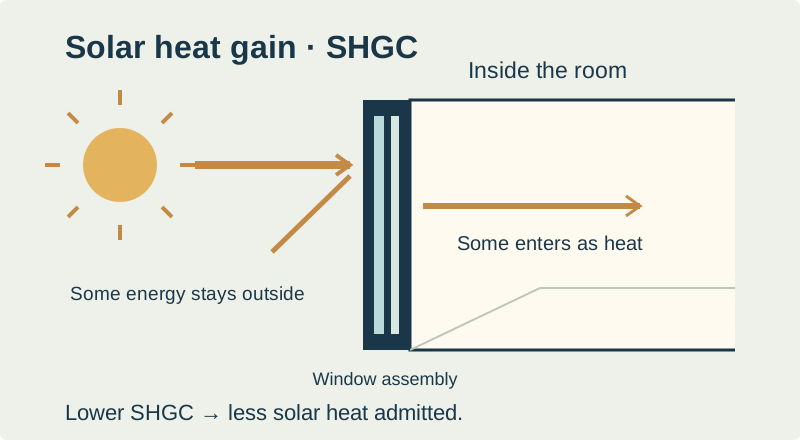
Solar heat gain coefficient describes the fraction of incident solar energy admitted as heat. Lower admits less solar heat. Orientation, shading and the project energy design affect the choice.
VT: the daylight you see
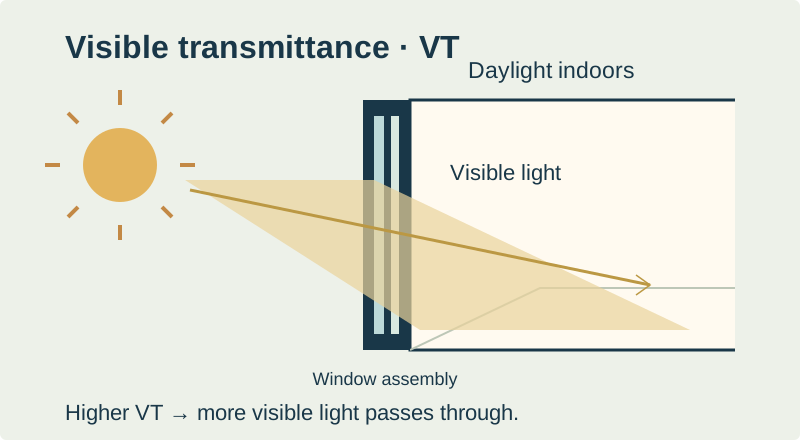
Visible transmittance describes how much visible light passes through. Higher generally means more daylight. It is a different number from SHGC: compare both when choosing glass.
The NFRC label rates the complete product. A center-of-glass value is a different measurement. Match the label or certification to the quoted configuration. Air-leakage and sound ratings address other questions; a low U-factor alone does not establish them.
Read NFRC's illustrated explanation or look up an NFRC label.
Choose how it opens
A fixed picture window provides a view without opening for ventilation. A slider moves sideways. Single- and double-hung windows move vertically. A casement swings from the side; an awning swings from the top. Check screen arrangements, access to handles and space outside the opening.
For a sleeping room, ask your designer to verify the required emergency escape opening using the manufacturer's actual clear-opening data. The overall frame size is not the same as the opening available when the sash is open.
For a rebuild, coordinate the mounting and flashing detail with the wall assembly. For a replacement, establish whether the existing frame stays or the entire unit is removed. The installation scope changes what you are comparing.
What can an upgrade buy?
| Upgrade to discuss | Possible benefit | Evidence to request |
|---|---|---|
| Different glass package | A different balance of solar heat, daylight, comfort or noise reduction. | Whole-unit energy ratings; applicable safety glazing; tested sound rating if noise is the goal. |
| A different frame or series | Different sightlines, colors, sizes or hardware options. | Section drawings, finish samples and the quoted series. |
| Larger or more complex openings | A particular view or opening arrangement. | Structural and installation review, operating weight, access and delivery plan. |
| A coastal finish or hardware option | Suitability for a more demanding exposure. | Manufacturer exposure limits, maintenance instructions and written warranty terms. |
Take a shortlist to your designer
Sources and further reading
Reviewed November 6, 2026. Manufacturer resources explain their own products; a link does not imply dealer authorization or availability through Angeles Works.
Bring your questions and your plans.
Send your schedule, drawings or the choices you are comparing. We can help identify the details needed for a quote.
Discuss your projectBack to all guides →